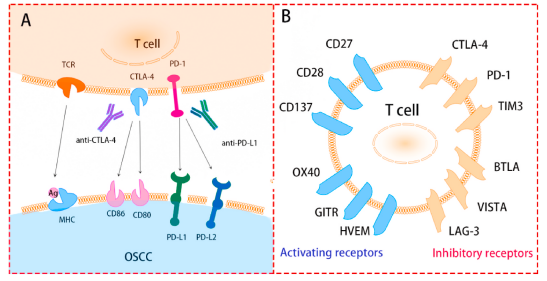
Figure 1: Mechanisms of immune-checkpoint blockade, illustrating PD-1/PD-L1-mediated immune regulation and tumour immune escape relevant to oral squamous cell carcinoma
Khalida Rizwan1* | Zafar Junaid2
1Biomedical Sciences, University of Pavia, Italy | 2Department Allied Health Sciences, Dow University of Health Sciences, Karachi, Pakistan
*Correspondence: Zafar Junaid (zafarjunaid493@gmail.com)
Received: 01 October, 2026; Revised: 21 October, 2026; Accepted: 23 October, 2026; Published: 30 October, 2026
Oral squamous cell carcinoma (OSCC) is a difficult disease to treat when local therapy is not curative, particularly when recur or metastasize. There is evidence of programmed cell death protein 1 (PD-1) inhibitors available to treat head and neck squamous cell carcinoma (OSCC), but it comes from mixed populations of head and neck cancer. The current narrative review outlines evidence regarding pembrolizumab and nivolumab, focusing on treatment selection and IRTs. Pembrolizumab is used either alone or in combination with chemotherapy, depending on programmed death-ligand 1 combined positive score (PD-L1 CPS), disease burden, urgency, fitness, and patient preferences. In the eligible post-platinum setting, there is evidence for nivolumab and pembrolizumab, though treatment after PD-1 exposure will be affected. Baseline evaluation and monitoring of toxicities are required, as well as rapid management based on severity, for the skin, endocrine, gastrointestinal, hepatic, pulmonary, cardiovascular, renal, neurological, and oral systems. Specific estimates for OSCCs are still scarce. Further treatment studies in the oral cavity region, the establishment of predictive markers, the development of resistance-directed treatments, and the standardization of reporting on oral cavity toxicity will help optimize treatment and patient outcomes.
Keywords: Biomarkers; Carcinoma; Immune Checkpoint Inhibitors; Immunotherapy
Oral squamous cell carcinoma (OSCC) is the most common oral malignancy, with recurrence or metastasis being a challenge when curative local treatment can no longer be achieved 1. The role of PD-1 inhibitors in systemic treatment of recurrent or metastatic head and neck squamous cell carcinoma (HNSCC) has revolutionized the treatment of this disease in a subset of patients, with durable survival benefits 2. The phase III KEYNOTE-048 trial determined pembrolizumab as a first-line treatment for patients with wild-type (WT) EGFR and programmed death-ligand 1 (PD-L1) combined positive score (CPS) ≥10 3. In 2025, it was followed by a five-year extension, which reported continued overall survival benefits for pembrolizumab alone in the PD-L1 CPS-positive population and pembrolizumab + chemotherapy in the overall study population 4. The current clinical guidance is focused on the combination of PD-L1 expression, disease burden, symptom burden, prior treatment, performance status, comorbidities, and patients' preferences to choose the right therapy 5. However, there are crucial questions that remain unanswered due to the inclusion of several anatomical subsites in pivotal HNSCC trials, which precludes direct interpretation of the results specifically for OSCC 6. Additionally, different responses to treatment and immune-related side effects require careful patient selection, close monitoring for toxicity, and tailored treatment 7, 8.
The objective of this review is to assess the clinical evidence for the use of PD-1 inhibitors in recurrent or metastatic OSCC, focusing on evidence-based patient selection, treatment response, and recognition and management of immune-related toxicities. This narrative review aimed to explore the clinical evidence of programmed cell death protein 1 (PD-1) inhibitors in recurrent or metastatic oral squamous cell carcinoma (OSCC) with a particular focus on efficacy, patient selection and immune-related adverse events. A systematic search of published clinical trials, systematic reviews, meta-analyses, clinical practice guidelines, and recent reviews focusing on head and neck squamous cell carcinoma (HNSCC) and immunotherapy was carried out. Current evidence with pembrolizumab and nivolumab was prioritized, including in the first-line and post-platinum treatment settings. Case selection and their interpretation were carefully examined, and any reports of oral cavity tumors within larger head and neck cancer cohorts were analysed in detail, as well as any differences between OSCC and non-OSCC data.
Programmed cell death protein 1 (PD-1)/programmed death-ligand 1 (PD-L1) axis is an inhibitory immune-checkpoint pathway that restrains T-cell activation and can be hijacked by oral squamous cell carcinoma (OSCC) for escaping immune surveillance Figure 1. Activated T cells that express PD-1 bind to PD-L1 on tumour and immune cells, which decreases intracellular signaling, cytokine production, and cytotoxic T-cell activity 9. Tumour-associated macrophages, regulatory T cells, myeloid-derived suppressor cells and cancer-associated fibroblasts also play a role in OSCC-associated immune evasion, playing a role in the creation of an immunosuppressive tumour microenvironment 10. PD-1 inhibitors block this inhibitory interaction, which could re-establish antitumor T-cell responses 11. However, there are some cases of non-uniform PD-L1 expression and other immunosuppressive pathways that could compromise the success of treatment. Therefore, knowledge of this pathway should serve as a biological rationale for checkpoint blockade but alone cannot predict an individual patient's response 12.
Figure 1: Mechanisms of immune-checkpoint blockade, illustrating PD-1/PD-L1-mediated immune regulation and tumour immune escape relevant to oral squamous cell carcinoma
First-Line Treatment (Pembrolizumab): The new phase III KEYNOTE-048 results are the key findings supporting pembrolizumab's role in first-line therapy in recurrent or metastatic head and neck squamous cell carcinoma (HNSCC). For patients with a programmed death-ligand 1 (PD-L1) combined positive score (CPS) ≥20, pembrolizumab alone showed a median overall survival (OS) of 14.9 months, versus 10.8 months for cetuximab-based chemotherapy (hazard ratio [HR] 0.61). In the CPS ≥1 population, median OS was 12.3 versus 10.3 months (HR, 0.74). In the overall population and the CPS ≥1 population, combination of pembrolizumab plus platinum and fluorouracil showed improvement in median OS (13.0 versus 10.7 months; HR, 0.71 and 13.6 versus 10.4 months; HR, 0.64, respectively) 3.
The results validate pembrolizumab as a monotherapy for the appropriate population of CPS-positive patients, especially those with low tumour burden and low symptom burden. However, a combination treatment may have a higher treatment success rate compared to monotherapy in the early stages of disease control. When rapid tumour reduction is clinically important, pembrolizumab plus chemotherapy is generally better, but adds to the hematological, gastrointestinal and other toxicities associated with chemotherapy. Because of this, biomarker results should be used in conjunction with disease kinetics, symptoms, comorbidities, and patient preferences to make treatment decisions, and not as the only basis 13.
Post-Platinum Treatment (Nivolumab and Pembrolizumab): Anti-PD-1 therapy is a proven treatment for eligible patients with platinum-refractory disease who have not been treated with PD-1 inhibitors in the recurrent or metastatic setting. The long-term subgroup analysis of Checkmate 141 looked at nivolumab in patients who had disease progression during or shortly after platinum therapy for locally advanced disease. The median OS was 7.7 months for nivolumab versus 3.3 months for investigator-selected chemotherapy (HR, 0.56; 95% CI, 0.34–0.94) 14. These findings corroborate the activity of nivolumab in this setting, albeit in a limited number of patients.
Pembrolizumab is also approved for use in platinum-refractory HNSCC. A systematic review and meta-analysis of 2023 randomized trials summarized the current evidence for immune checkpoint inhibitor efficacy and safety and identified that there were some differences in the setting and the regimen 15. The lack of resistance after treatment with checkpoint inhibitors is different from that observed after other PD-1 inhibitors, so they should not be used interchangeably without further studies to determine whether prior exposure to the PD-1 inhibitor has influenced the likelihood of developing resistance. It is not appropriate to assume that the efficacy of the evidence for treatment after platinum failure can be extrapolated to patients with disease progression on PD-1 therapy.
Alternative Chemotherapy Backbones: KEYNOTE-B10 investigated pembrolizumab combined with carboplatin and paclitaxel as first-line treatment for recurrent or metastatic HNSCC. A single-arm study has shown an objective response rate of 49% in this combination, which could be an alternative when the use of fluorouracil is not indicated or feasible 16. Comparative efficacy, survival benefit and toxicity data, however, with respect to the platinum-fluorouracil backbone are limited by the lack of a randomized comparator. The overall evidence favors PD-1 inhibitors irrespective of first-line or post-platinum use, and should be tailored to the clinical context. As the key studies included patients from various subsites of HNSCC, the overall findings apply to the management of OSCC, but not necessarily to oral cavity tumors Table 1.
| Study (Reference) | Study/treatment setting | Main findings | Key limitation |
|---|---|---|---|
| Harrington et al., 2023 3 | KEYNOTE-048; first-line pembrolizumab | Pembrolizumab monotherapy improved overall survival in PD-L1 CPS-positive populations; pembrolizumab plus chemotherapy improved survival in the overall population. | Included multiple HNSCC subsites rather than an OSCC-only population. |
| Gillison et al., 2022 14 | CheckMate 141; platinum-refractory disease | Nivolumab maintained an overall survival advantage at two-year follow-up in the evaluated subgroup. | Subgroup analysis with a relatively small sample. |
| Haddad et al., 2023 17 | CheckMate 651; first-line nivolumab plus ipilimumab | Dual checkpoint inhibition did not significantly improve overall survival in the primary analysis populations compared with standard chemotherapy. | Results do not establish this combination as a superior first-line option. |
| Dzienis et al., 2024 16 | KEYNOTE-B10; pembrolizumab plus carboplatin–paclitaxel | The single-arm study reported an objective response rate of 49%, supporting an alternative chemotherapy backbone. | No randomized comparator. |
| Dang et al., 2023 18 | Systematic review and meta-analysis of randomized trials | Anti-PD-1/PD-L1 monotherapy improved overall survival compared with standard treatment in pooled analyses. | Included heterogeneous trials, regimens, and HNSCC populations. |
PD-L1 CPS and Biomarker Interpretation: Programmed death-ligand 1 (PD-L1) immunohistochemistry is a crucial element in the patient selection for first-line pembrolizumab in recurrent/metastatic head and neck squamous cell carcinoma (HNSCC). The positive score (CPS) combines the percentages of PD-L1-positive tumour cells, lymphocytes, and macrophages, and is calculated by adding these percentages and multiplying by 100. While CPS ≥1 identifies a disease relevant to pembrolizumab selection, there is no association between CPS and response to therapy 19. In addition, there is technical interpretation of the results for PD-L1. However, even slight variations in the immunohistochemical assays may impact classification around clinically relevant thresholds of CPS, so there is a need for validated testing methods and representative tumour tissue 20. Tumour mutational burden and T-cell-inflamed gene-expression profiles have been shown to predict response to CPS and need further validation, but should not routinely be pursued in place of CPS assessment 21.
Clinical Factors and Treatment Choice: Results of biomarkers should be included with Eastern Cooperative Oncology Group (ECOG) performance status, comorbidities, organ function, prior platinum therapy, and prior immunotherapy. A regimen that emphasizes early tumour control may be more appropriate for rapid progression, severe pain, dysphagia, threatened airway and/or extensive disease. However, there should be some consideration for treating with monotherapy if there is significant comorbidity or if the chemotherapy is not tolerated 22. Some autoimmune diseases, immunosuppressive medications, and prior organ transplants require careful consideration and may be contraindications to immune checkpoint blockade, as it could exacerbate autoimmune disease or lead to other complications 23. Lastly, the expected toxicity, quality of life, treatment availability, and patient preference should be taken into account in shared decision-making. However, a multidisciplinary assessment is still crucial if potentially curative salvage surgery or re-irradiation are still possible 24.
Spectrum and Clinical Presentation: Immune-related adverse events (irAEs) have the potential to occur in normal tissues as a result of overactive immune responses against them, which is a potential side effect that PD-1 inhibitors could cause. Dermatitis, pruritus, thyroid dysfunction, diarrhea, colitis, hepatitis and pneumonitis, myocarditis, nephritis and neurological complications are common, while other complications are less frequent but potentially life-threatening 25. Some of the endocrine side effects can continue after their treatment has stopped, and may need to be treated long-term with hormones. It is important to note that irAEs can occur even after treatment and not just during treatment. They can be mild or severe, and prompt detection is crucial to reduce any complications and to not interfere with the effective anti-cancer treatment 26.
Baseline Assessment and Monitoring: Clinicians should record any pre-existing autoimmune conditions, other medications being taken, baseline symptoms, and relevant comorbidities prior to treatment. Initial laboratory tests usually consist of complete blood count, renal and hepatic function tests, and thyroid function tests, which are further supplemented by additional tests based on clinical history and treatment protocols 27. Symptom assessment and lab monitoring should be repeated at clinically appropriate intervals during therapy. If there are any new respiratory symptoms, persistent diarrhea, jaundice, severe weakness, or neurological changes, this should be evaluated promptly. Patient education is also crucial as some toxicities occur with less specific symptoms 28.
Management According to Severity: The level of toxicity and the stability of the patient's condition depend on management. Symptomatic treatment may be sufficient for mild events, where appropriate, along with immunotherapy. Moderate toxicities can be treated based on presentation with interruption of treatment, further investigations, and corticosteroid use. When severe or life-threatening events occur, immunotherapy is usually paused, immediate specialist consultation is required, and appropriate systemic corticosteroid/immunosuppressive therapy is indicated in these cases 29. For severe irAEs, corticosteroids should be gradually weaned based on clinical response and published guidelines. Organ-specific immunomodulatory treatment may be needed for refractory cases. The extent of toxicity, the likelihood of recovery from the toxicity, the risk of recurrence, and the potential oncologic benefit should all be taken into account when deciding about rechallenge 30. The early involvement of multiple disciplines can enhance accuracy of diagnosis and aid in the differentiation of immune-mediated injury from disease progression or complications of treatment 31.
Oral Cavity-Specific Considerations: The special importance of oral irAEs is due to the potential for mucosal inflammation, ulceration, dysgeusia, dysphagia and xerostomia in OSCC, which can affect nutrition and quality of life. Pooled prevalences of about 5% for xerostomia and 3% for mucositis/stomatitis were estimated in a meta-analysis, but it was difficult to obtain consistent reporting of these outcomes across trials 11. Specialist oral assessment and, in a few cases, biopsy may be needed to differentiate immune-mediated lesions from recurrent tumour and previous radiotherapy and infection Table 2.
| Study (Reference) | Organ system/toxicity | Clinical presentation | Key management consideration |
|---|---|---|---|
| Brahmer et al., 2021 28 | General immune-related toxicity | New or worsening symptoms affecting multiple organ systems | Grade severity, investigate promptly, and manage according to organ involvement. |
| Chen et al., 2022 32 | Skin | Rash, pruritus, inflammatory dermatitis | Assess severity and institute appropriate dermatological treatment. |
| Husebye et al., 202233 | Endocrine | Thyroid dysfunction, hypophysitis, adrenal insufficiency | Perform hormone assessment and provide replacement therapy when indicated. |
| Zoghbi et al., 2024 34 | Gastrointestinal | Diarrhoea, abdominal pain, colitis | Exclude infection, assess severity, and initiate appropriate treatment. |
| Yu et al., 2023 35 | Pulmonary | Cough, dyspnoea, suspected pneumonitis | Promptly investigate symptoms and manage according to toxicity severity. |
| Sprangers et al., 2022 36 | Renal | Acute kidney injury, rising serum creatinine | Assess renal function, exclude alternative causes, and consider specialist evaluation. |
| Raschi et al., 2023 37 | Cardiovascular | Myocarditis, chest pain, arrhythmias | Arrange urgent cardiovascular evaluation for suspected serious toxicity. |
| Srivastava et al., 2024 38 | Oral and mucosal | Xerostomia, mucositis, dysgeusia, oral pain | Differentiate immune-mediated lesions from infection, tumour progression, and previous treatment effects. |
While PD-1 inhibitors have been approved for recurrent or metastatic head and neck squamous cell carcinoma (HNSCC), their effectiveness specifically in oral squamous cell carcinoma (OSCC) is not as well described. Some anatomical subsites had multiple trials; the subgroups of the oral cavity were typically underpowered to determine independent effects of treatment. Therefore, survival estimates for overall HNSCC should not be taken as a proxy for the outcomes of OSCC 39.
OSCC-targeted reviews in recent years have shown great promise for immunotherapeutic agents but also included several challenges such as the size of the patient cohorts, a wide variety of treatment regimens, and less than ideal prospective data for recurrent or metastatic disease. In addition, resistance to primary or acquired resistance is a great challenge, and the success of PD-1 blockade is limited in the HNSCC population 40. Additional studies are needed that focus on clinical trials that are well-powered, OSCC-stratified, and prospective validation of predictive biomarkers other than PD-L1, combined positive score, and resistance mechanisms and combinations 41. Real-world studies should provide results by anatomical subsite, treatment sequence, and biomarker status. Standardized reporting of oral toxicities, patient-reported outcomes, and quality of life also could enhance the clinical applicability of the evidence of immunotherapies 42.
The diagnosis and the degree of dissemination of the disease should be re-established and discussed at a multidisciplinary tumour board at the time of recurrence or metastasis. Assess if salvage surgery, re-irradiation or local treatment of selected oligometastatic disease is feasible before considering systemic palliative therapy. Check performance status, comorbidities, previous platinum and immunotherapy history, symptoms, tumour kinetics, and recent tissue; get PD-L1 combined positive score (CPS) testing if applicable for selection of first-line pembrolizumab. Determine treatment based on the urgency of the disease, clinical eligibility, local approvals, and patient choice. Describe warning signs and have a direct line to an emergency contact. Re-evaluate symptoms, functional status, lab abnormalities, and treatment tolerance at each visit; follow treatment protocol and course for imaging. If immune toxicity is suspected, prompt evaluation and treatment of the organ-specific toxicity should be done instead of waiting for the next visit. Reevaluate local treatment options, biopsy requirements, prior drug exposure, clinical trial and supportive/palliative care requirements if disease progresses 43.
The addition of PD-1 inhibitors has led to a new paradigm in oral squamous cell carcinoma (OSCC) treatment, providing patients with prolonged survival in a subset of those who are successfully matched. Consideration of treatment should include PD-L1 combined positive score, disease burden, clinical urgency, prior treatment, performance status, and individual toxicity risk. However, the precision of conclusions from OSCC populations is limited by evidence from heterogeneous groups of head and neck cancer. Future studies should focus on prospective studies on OSCC, validation of predictive biomarkers, better methods to overcome treatment resistance, and standardized monitoring of immune-related oral toxicities to optimize clinical outcomes and quality of life.
This work is published by Multidisciplinary Scholarly Advancement and Research MSAR Institute. © 2026 The Author(s). The full terms of Journal Publishing policies are available at https://msarjournals.com/index.php/index/open-access and incorporate the Creative Commons Attribution – Non Commercial (CC BY-NC 4.0) License https://creativecommons.org/licenses/by-nc/4.0/. By accessing the work you hereby accept the Terms. Non-commercial uses of the work are permitted without any further permission, provided the work is properly attributed. Publisher’s Note: MSAR Institute remains neutral with regard to jurisdictional claims in published maps and institutional affiliations, and assumes no liability for the scientific accuracy or clinical efficacy of the content herein, as they rest entirely with the authors.