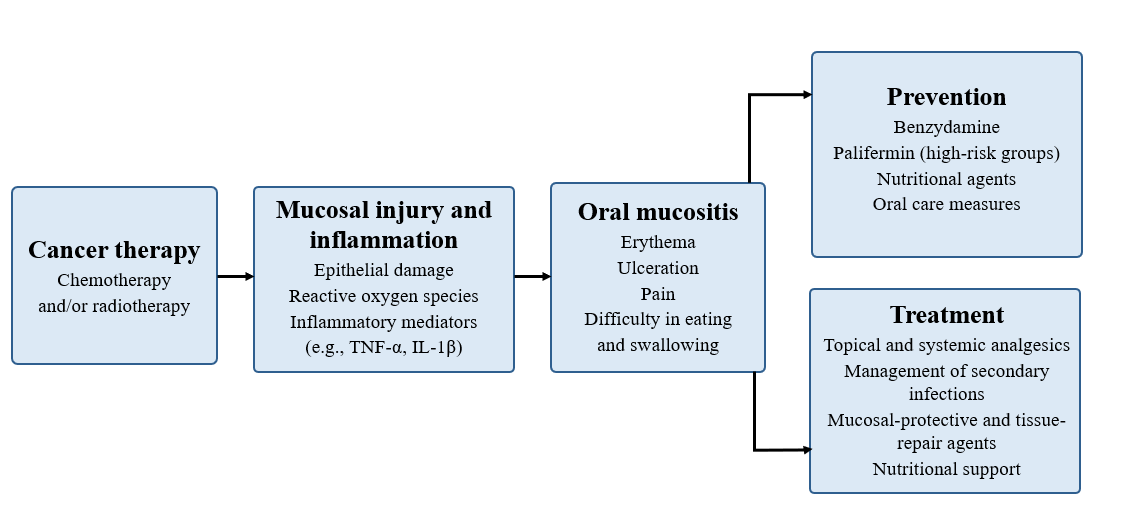
Figure 1: Overview of cancer therapy-induced oral mucositis, illustrating the progression from treatment-related mucosal injury and inflammation to clinical manifestations, with key approaches to prevention and treatment.
Maryum Sana1*
1Department of Nursing and Allied Health Sciences , University of Health Sciences, Lahore, Pakistan
*Correspondence: Maryum Sana (maryum.sana.med@gmail.com)
Received: 26 September, 2026; Revised: 21 October, 2026; Accepted: 23 October, 2026; Published: 30 October, 2026
Oral mucositis (OM) is a common side effect of cancer treatment that results in painful mucosal ulceration, decreased oral intake, and diminished quality of life. Although supportive care has made improvements, there is still a problem with its prevention and treatment. This mini-review examines the pharmacological prevention and management of cancer therapy-induced OM with emphasis on clinical evidence and limitations. Benzydamine, palifermin (in certain high-risk groups), and nutritional agents of varying levels of evidence are used in preventive interventions. Treatment of mucositis once it has occurred is based on topical and systemic analgesics and treatment of secondary infections and complications. There is some inconsistent evidence for mucosal-protective and tissue-repair agents, and it is important to differentiate between symptom relief and improvement of mucosal function. The choice of intervention should depend on the patient's cancer treatment plan, the severity of the mucositis, and the patient's characteristics. More carefully designed clinical trials with consistent endpoints are required to determine comparative effectiveness and to maximize tailored management.
Keywords: Drug Therapy; Mucositis; Neoplasms; Oral Ulcer; Prevention and Control; Radiotherapy; Stomatitis.
Oral mucositis (OM) is a common and clinically significant problem of cancer treatment, especially chemotherapy and/or radiotherapy, including head and neck radiation and chemoradiotherapy 1. It is defined as inflammation and ulceration of the oral mucosa, which leads to pain, difficulty with eating and swallowing, poor nutritional intake, and decreased functional status. In severe cases, opioid analgesia, nutritional support, hospitalisation, or modification of anticancer treatment may be required, which could affect treatment continuity 2, 3. The risk of developing OM and the severity of the symptoms depend on the type of anticancer therapy, its intensity, radiation dose and patient susceptibility. While supportive care is improved, prevention of mucosal injury and management of established ulceration is still a challenge. Furthermore, the effectiveness of interventions differs between clinical settings. An agent that has been shown to have a beneficial effect on the incidence of mucositis in a specific treatment group cannot be assumed to be effective for treating existing mucositis 1,4.
The current management involves administration of drugs to inhibit inflammation, to protect the mucosal tissues, to promote epithelial healing, and to alleviate pain. Recommendations, however, are very specific, and evidence for specific interventions is limited. The Multinational Association of Supportive Care in Cancer and International Society of Oral Oncology (MASCC/ISOO) guidelines offer a valuable evidence-based resource for deciding on preventive and therapeutic interventions 1. This mini-review evaluates the role of pharmacological interventions in the prevention and management of cancer therapy-induced OM, focusing on the clinical effectiveness, the right place for the intervention, and the limitations in available evidence. Special emphasis is given on distinguishing preventive measures from therapeutic interventions for existing mucositis and priorities for future clinical studies.
A structured literature search was conducted in PubMed and Google Scholar for articles related to cancer therapy-induced oral mucositis, its pathobiology, and pharmacological prevention and treatment. Relevant keywords and Medical Subject Headings (MeSH) terms included “oral mucositis,” “cancer therapy,” “chemotherapy,” “radiotherapy,” “drug therapy,” “prevention,” and “treatment.” The retrieved literature was screened for relevance to the objectives of this mini-review, with emphasis on clinical guidelines, systematic reviews, meta-analyses, and relevant clinical studies. The evidence was critically reviewed to summarize current management approaches and identify limitations in the available literature.
Mechanisms of Mucosal Injury and Inflammation: Cancer therapy-induced OM occurs in a series of steps that include epithelial damage, inflammatory signaling, ulceration, and tissue repair. Chemotherapeutic agents and ionizing radiation induce cellular stress and trigger inflammatory pathways by damaging epithelial cells and producing reactive oxygen species. Nuclear factor kappa B (NF-κB) plays a role in the amplification of inflammation through mediators such as tumour necrosis factor alpha and interleukin-1 beta. These processes can worsen the effects of the initial cancer-treatment injury 5-7. As the injury worsens, the epithelium becomes damaged, leading to painful ulcers. The interaction between oral microorganisms and mucosal damage may also influence local inflammation, especially in immunocompromised individuals. Resolution of inflammatory activity, epithelial proliferation, and re-establishment of the mucosal barrier are necessary for healing. The biological complexity of this process helps explain why mucositis cannot be completely prevented or treated by a single intervention across all cancer-treatment settings 7,8.
Clinical Severity and Treatment-Related Differences: Symptoms range from erythema and soreness to extensive ulceration, severe pain, and loss of the ability to tolerate solid food. Mucositis severity is assessed using systems such as the World Health Organization (WHO) grading scale and the Common Terminology Criteria for Adverse Events (CTCAE). Assessment should consider visible mucosal lesions and their functional implications, including oral intake and dysphagia 6,9,10. Mucositis associated with chemotherapy can affect several oral sites, whereas radiotherapy-induced injury is generally concentrated in irradiated tissues. Combined chemoradiotherapy and high-dose conditioning regimens before hematopoietic stem cell transplantation are also important high-risk settings. These differences influence the expected severity of mucositis and the appropriate selection of preventive strategies 7,11. Clinical assessment should therefore consider mucosal findings, symptom severity, functional impairment, and the treatment regimen. These factors support appropriate intervention selection and help distinguish prevention from the management of established mucosal injury 9,12. Cancer therapy-induced oral mucositis involves epithelial injury and inflammatory signaling, leading to mucosal ulceration, pain, and difficulties with eating and swallowing. The main preventive and therapeutic approaches are summarized in Figure 1.
Figure 1: Overview of cancer therapy-induced oral mucositis, illustrating the progression from treatment-related mucosal injury and inflammation to clinical manifestations, with key approaches to prevention and treatment.
Anti-Inflammatory Agents: Benzydamine is a topical anti-inflammatory drug that has been shown to prevent and lessen the severity of oral mucositis in certain patients receiving radiotherapy for head and neck cancer. The effects are linked with modulation of inflammatory mediators and decreasing the inflammatory response locally. MASCC/ISOO guidelines recommend using a mouthwash containing benzydamine for patients who are being treated with moderate-dose head and neck radiotherapy and suggest that it can be used for selected patients receiving concurrent chemoradiotherapy. But do not assume these recommendations apply to all radiotherapy treatments, especially if the intensity of the treatment is different, or if patients are of different ages, sizes or health 1,13. The anti-inflammatory activity of benzydamine has clinical relevance since inflammation plays a role in the development of mucosal damage. However, it can be viewed as a preventive measure for a specific regimen and not as a panacea. Anti-inflammatory effects of other agents have been inconclusive and must be based on existing clinical data, not just because of mechanism of action 13.
Cytoprotective Agents and Growth Factors: Clinical evidence supports its preventive use in selected patients with hematological malignancies receiving high-dose chemotherapy and total-body irradiation followed by autologous hematopoietic stem cell transplantation. It should not be seen as a treatment that is effective in all cancer treatments for the prevention and treatment of mucositis 1,14. Amifostine has also been studied for prevention of treatment-induced mucosal damage. Results from other clinical trials have, however, been variable, and it has not been recommended as a routine practice for preventing oral mucositis. The implications of this distinction between biological activity and evidence of clinically meaningful benefit in a defined patient population are beautifully highlighted in these examples 14.
Natural Compounds and Nutritional Interventions: The nutritional interventions such as use of glutamine have been investigated for their role in epithelial metabolism, in tissue repair and in maintaining mucosal integrity. But effectiveness depends on the intervention, route of administration, modality of cancer therapy, and patient population. The few systematic reviews identified in an umbrella review differed in the level of certainty and consistency of the evidence, meaning that there is a need for caution during interpretation and use of all supplements 15. Honey is also being studied as a preventive intervention due to its anti-inflammatory, antioxidant, and tissue-protective properties. In a network meta-analysis of 55 randomized controlled trials (RCTs) with a total of 3,552 participants, researchers found that honey had a positive effect on moderate-to-severe oral mucositis relative to a placebo. These results should be interpreted considering the different protocols in the studies and the different patient groups, and not as proof of the effectiveness of all honey preparations 16. Some studies have investigated the effects of probiotics on oral microbial communities and inflammatory responses. Their effects as preventive agents for cancer treatment-induced mucositis were evaluated; however, the study should be interpreted with caution due to potential variations across probiotic strains and clinical populations as well as treatment protocols. Probiotics, however, are still an emerging strategy and cannot be used in place of interventions with proven guidelines 17.
Treatment-Specific Preventive Approaches: Prevention should be selected according to the anticancer regimen rather than applied uniformly. Oral cryotherapy, the application of oral mucosa cooling during 5-FU chemotherapy treatment, is recommended to be used during chemotherapy and may be considered in selected patients receiving high-dose melphalan before transplant. Its effect is associated with the transient vasoconstriction that decreases the local exposure to circulating cytotoxic agents during administration 1,18. Another preventive therapy recommended is photobiomodulation in patients who are about to undergo a hematopoietic stem cell transplant, and head and neck radiotherapy with or without chemotherapy. It is a physical, not pharmacological, intervention, but still relevant to a review of prevention of mucositis, as it is part of the larger clinical guidelines. It requires the use of appropriate and reproducible treatment parameters to be effective 1,19. Overall, preventive interventions should be matched to the treatment regimen and supported by clinical evidence. Oral care remains an important component of supportive management, but it should complement rather than replace regimen-specific preventive measures when these are indicated. The principal preventive interventions, their clinical settings, and the limitations of the available evidence are summarized in Table 1.
| Study (Reference) | Intervention | Clinical setting | Evidence and limitations |
|---|---|---|---|
| Ariyawardana et al., 2019 45 | Benzydamine and other anti-inflammatory agents | Women showed higher pharmacokinetic exposure for many evaluated drugs and a higher frequency of female-biased ADRsSelected radiotherapy and chemoradiotherapy settings | Sex-related differences in drug concentrations, clearance and eliminationGuideline recommendations are intervention- and regimen-specific. |
| Spielberger et al., 2004 14 50 | Palifermin | High-dose therapy for hematological malignancies | Sex-disaggregated pharmacovigilance can help identify groups at increased risk of ADRsPreventive benefit demonstrated in a selected high-risk population. |
| Amiri Khosroshahi et al., 2023 15 | Nutritional interventions, including glutamine | Different cancer-treatment settings | Evidence certainty varies by intervention and administration route. |
| Peng et al., 2022 16 | Preventive interventions, including natural products | Cancer treatment-associated OM | Network meta-analysis; findings require interpretation in light of trial heterogeneity. |
| Liu et al., 2022 17 | Probiotics | Cancer treatment-associated OM | Potential preventive benefit; evidence varies by strain and treatment setting. |
| Correa et al., 2020 18 | Oral cryotherapy | Bolus 5-fluorouracil and selected high-dose melphalan regimens | Supported for specific chemotherapy settings. |
| Zadik et al., 2019 19 | Photobiomodulation | Selected transplantation and head and neck radiotherapy settings | Guideline-supported in defined settings; this is a physical, not pharmacological, intervention. |
Topical Analgesics and Local Anesthetics: Mucositis pain is often relieved with the use of topical analgesics and local anesthetics for short periods of time. Lidocaine-based preparations can be used to minimize pain with eating, drinking, and oral care, especially if lesions are localized. But their effects are short-lived, and the decreased oral sensation can hinder safe swallowing. The use of these preparations should be based on the patient's clinical situation and symptoms and not as a direct mucosal healing agent 1,20. In a randomized clinical trial of patients undergoing head and neck radiotherapy, doxepin mouthwash and a diphenhydramine, lidocaine, antacid mouthwash both proved effective at reducing mucositis pain. Both treatments decreased pain at 0.5 hr after administration compared to placebo, but less than the prespecified minimal clinically important difference. Doxepin has also been linked to gastrointestinal symptoms, such as increased sleepiness, bad taste, and stinging and burning in the mouth – which should be taken into account in addition to the analgesic effect 21.
Systemic Analgesics and Opioid Therapy: Opioids are useful for the management of severe pain, especially in those with abundant ulceration or poor oral intake. Treatment should take into account pain intensity, past use of analgesics, co-morbidities, and risk for adverse effects. If patients are unable to swallow easily, other methods of feeding may be necessary, and there may be a need for extra feeding support 22. In certain settings of hematopoietic stem cell transplantation, patient-controlled analgesia with morphine is recommended. The use of topical morphine has also been explored as a pain treatment for mucositis. In a small, randomized study of patients with head and neck cancer, the severity of mucositis was reduced more with the use of morphine mouthwash than with conventional mouthwash 22,23.
Anti-Inflammatory and Mucosal-Protective Treatments: Anti-inflammatory and mucosal-protective medications are used to decrease discomfort or to protect damaged tissue. However, any improvement in symptoms should not be taken as proof of quicker epithelial healing. The clinical efficacy of specific coating agents and mouthwash preparations differs, and no specific preparation is considered to be universally effective for treatment of established mucositis 1,24. Due to the mucosal-protective properties investigated, sucralfate has been examined in a variety of contexts, with no evidence for its routine use to prevent/manage the acute pain of oral mucositis in several of these trials. Likewise, compounded mouthwashes can be used to relieve symptoms, but their efficacy is dependent on the ingredients, formulation, and clinical setting 24.
Growth Factors and Tissue-Repair Strategies: Investigators have been looking at growth factors and other tissue-repair agents, since epithelial regeneration is critical for the recovery of mucosa. Evidence to support the use of palifermin is mainly related to the prevention of specific patients under high-dose cancer therapy and transplantation-related conditioning. Routine treatment of established ulcerative mucositis is not within its scope of preventative efficacy. Additional clinical trials should be performed to determine the healing benefits of other regenerative agents in terms of time, pain, and function following the onset of lesions 1,14.
Antimicrobial Treatment When Clinically Indicated: Antimicrobial treatment is advised if a secondary oral infection is diagnosed or is suspected. Oral infections are not synonymous with mucositis and can be caused by treatment for cancer, disruption of the mucosal barrier, or immunosuppression. Therefore, antifungal, antiviral, or antibacterial therapy should be chosen based on the suspected or diagnosed pathogen and the clinical status of the patient. There is no reason to routinely administer antimicrobials for the sole purpose of treating mucosal inflammation unless there is a proper indication for their use 24. In general, effective pain management, adequate fluid and nutrition, and management of documented complications should be the priorities in the treatment of established OM. Pharmacological treatments can alleviate symptoms but do not always promote tissue repair and therefore need to assess pain, oral intake, mucosal healing, and tolerability of treatment separately. The principal pharmacological options for established oral mucositis, their therapeutic objectives, and the limitations of the supporting evidence are summarized in Table 2.
| Study (Reference) | Intervention | Therapeutic objective | Evidence and limitations |
|---|---|---|---|
| Saunders et al., 2020 20 | Topical anesthetics, analgesics, and mucosal coating agents | Pain relief and symptomatic management | Evidence and recommendations vary by agent and clinical setting. |
| Sio et al., 2019 21 | Doxepin mouthwash and diphenhydramine–lidocaine–antacid mouthwash | Short-term pain relief | Both reduced pain compared with placebo; adverse effects and the magnitude of benefit should be considered. |
| Coda et al., 1997 22 | Patient-controlled morphine, hydromorphone, or sufentanil | Severe mucositis-associated pain after transplantation | Comparative opioid analgesia study in a specific clinical population. |
| Sarvizadeh et al., 2015 23 | Morphine mouthwash | Local pain management | Findings support further investigation; broader applicability requires caution. |
| Sant Ana et al., 2020 24 | Topical treatments for oral mucositis | Symptom control and mucosal management | Systematic review of randomized trials; interventions and findings vary. |
Matching Treatment to Clinical Context: The selection of interventions for oral mucositis should consider the cancer-treatment regimen, mucositis severity, predominant symptoms, patient characteristics, and treatment tolerability. Preventive measures need to be chosen based on the clinical situation where their effectiveness has been proven, whereas the management of established mucositis should aim to treat pain, inadequate oral intake, and mucosal damage. This is especially critical because studies that provide evidence for one intervention in a defined population may not be relevant to those treated with different interventions 25,26. Age and treatment characteristics also influence the applicability of available evidence. A systematic review of oral mucositis management in children suggested that some treatments might be beneficial and highlighted the difficulty of establishing consistent treatment protocols from heterogeneous studies. Thus, results of studies in children must be interpreted with caution and not be directly extrapolated to adults without considering differences in cancer treatment and clinical context 27.
Limitations of Current Evidence: There are many interventions that can be used to prevent or treat mucositis, but study design and treatment protocols, as well as the grading of mucositis and the measurement of outcomes, make it difficult to compare interventions. A network meta-analysis of topical preventive agents reported potential differences in effectiveness and also stressed the need to consider the relative ranking of the preventive agents based on the number and the limited number of available trials 28. Likewise, a network meta-analysis of natural products presented encouraging results for a few interventions, but the results did not imply efficacy equivalence between natural product intervention preparations or between different patient groups 29.
Emerging Therapeutic Directions: Emerging approaches include novel topical formulations and strategies intended to improve mucosal healing, reduce inflammation, and control microbial interactions. Photodynamic therapy has demonstrated good results, especially in combination with photo-modulation, although the clinical evidence is still scarce and would need to be confirmed in larger, well-designed studies 30. Future studies need to focus on RCTs with appropriate sample size, pain assessment, clinically relevant outcomes such as healing time, oral intake, and treatment interruption. Precisely identifying treatment-specific risk factors may also enhance the identification of preventive interventions. The priorities outlined are essential to ensuring the delivery of effective and consistent clinical practice from these promising therapeutic approaches.
Oral mucositis is still a significant problem in the management of cancer treatment, which affects pain management, nutrition, quality of life, and/or the ability to continue treatment. Its management must take into account the difference between preventing mucosal injury and treating the existing ulceration. Selected interventions have been shown to be successful in certain clinical contexts, but the evidence is inconsistent among agents and cancer-treatment regimens. The choice of preventive strategy should then be based on current clinical guidelines, and treatment should focus on appropriate pain control, keeping the mouth open, and dealing with known complications. Validating these promising nutrition, natural product, and tissue-repair strategies will take additional research and testing before their advantages are seen in all patient groups. Standardized mucositis grading, clinically relevant outcomes, and well-defined treatment settings should be used in future clinical trials. A personalized and evidence-based strategy can enhance the benefits of cancer prevention and therapy, and diminish the burden of cancer treatment-related oral mucositis.
This work is published by Multidisciplinary Scholarly Advancement and Research MSAR Institute. © 2026 The Author(s). The full terms of Journal Publishing policies are available at https://msarjournals.com/index.php/index/open-access and incorporate the Creative Commons Attribution – Non Commercial (CC BY-NC 4.0) License https://creativecommons.org/licenses/by-nc/4.0/. By accessing the work you hereby accept the Terms. Non-commercial uses of the work are permitted without any further permission, provided the work is properly attributed. Publisher’s Note: MSAR Institute remains neutral with regard to jurisdictional claims in published maps and institutional affiliations, and assumes no liability for the scientific accuracy or clinical efficacy of the content herein, as they rest entirely with the authors.