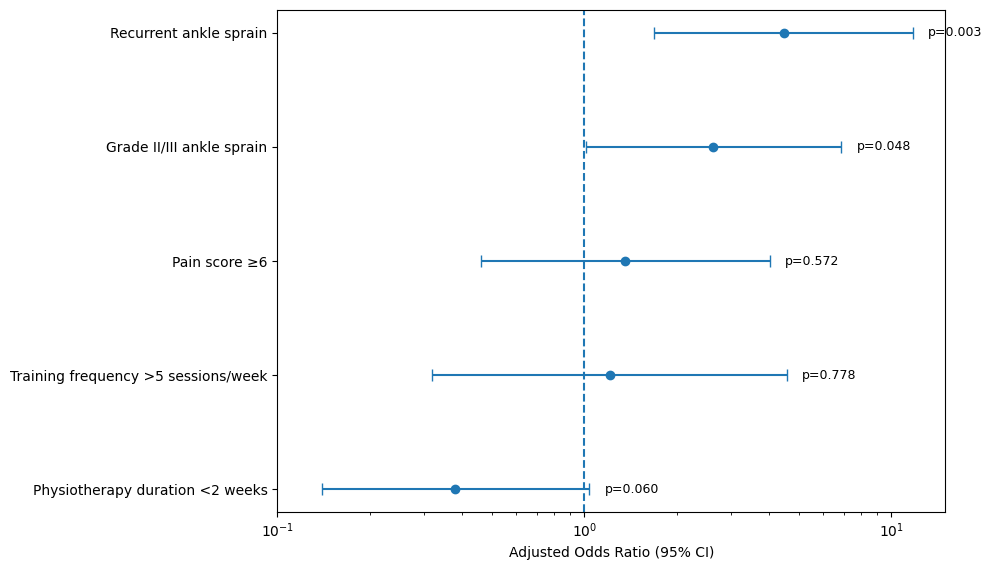
Figure 1: Forest Plot of Multivariable Logistic Regression Analysis for Factors Associated with Poor Functional Outcome Among University Athletes
Mehmona Inam1* | Habib Ullah2
1Allied Health Sciences, Shaikh Zayed Hospital, Lahore, Pakistan
*Correspondence: Habib Ullah (habibullahszm@gmail.com)
Received: 10 September, 2026; Revised: : 18 October, 2026; Accepted: 21 October, 2026; Published: 30 October, 2026
Background: Ankle sprains can be a frequent sports injury that can lead to recurrent instability and chronic functional impairment in university athletes. This study aims to quantify ankle sprain burden, assess the functional consequences of ankle sprains, and identify factors associated with poor functional outcomes in university athletes receiving physiotherapy. Methods: This cross-sectional study was conducted with a sample of 90 university athletes who had been diagnosed with an ankle sprain and were receiving physiotherapy treatment between January and June 2024. Data were collected using a structured questionnaire and clinical assessment form in relation to the demographics, athletic, and injury-related information. Functional status was assessed by the Foot and Ankle Ability Measure (FAAM). Descriptive statistics, chi-square test, and multivariable logistic regression were used, and p<0.05 was considered significant. Results: A total of 55(61.1%) athletes experienced a recurrence of ankle sprains, and 73(81.1%) reported that the mechanism of injury was inversion. Poor functional outcome (FAAM <75%) occurred in 53(58.9%), with a mean FAAM score of 71.8±9.4. Functional impairment was significantly associated with previous sprains (χ²=9.215, p=0.010). Recurrent sprain (AOR 4.46, 95% CI 1.69–11.80; p=0.003) and Grade II/III injury (AOR 2.63, 95% CI 1.01–6.89; p=0.048) independently predicted poor function. Conclusions: There was significant functional disability seen with recurrent and higher-grade ankle sprains. Structured rehabilitation could optimize recovery, and future research should focus on long-term recurrence and return to play in prospective studies.
Keywords: Ankle Injuries; Athletes; Cross-Sectional Studies; Patient Outcome Assessment; Physical Therapy Modalities; Recurrence; Sports; Treatment Outcome.
Ankle sprains are among the most common musculoskeletal injuries in sports, especially in running, jumping, rapid acceleration, and changing directions (such as in football, basketball, and volleybal 1. Although ankle sprains are relatively minor injuries, they can sometimes lead to long-term symptoms, physical dysfunction, and decreased function 2. The most common cause of sports-related ankle injuries is lateral ankle sprain, which is primarily the result of excessive eversion and plantar flexion 3. There is recent evidence that previous ankle injury is one of the most important risk factors for re-injury and chronic ankle instability 4. Chronic ankle instability is defined by recurrent episodes of giving way, a balance deficit, decreased confidence when playing sport, and a chronic functional deficit 5.
University students are especially at risk because they are engaged in high-exposure sport training, competitive sport, and often in high-risk sport activities 6. Previous ankle sprain, impaired dynamic balance, and neuromuscular control were found to be important risk factors for athlete ankle injury occurrence in a systematic review and meta-analysis 7. Moreover, injury patterns and recovery outcomes could vary by sex, sport type, training demands, and type of injury 8. While many athletes get back to their sport after an ankle sprain occurs, some may have some functional impairment that lasts even after symptoms have resolved 9. Patient-reported outcome measures have emerged as a standard means of assessing activity limitations and recovery from Ankle ligament injuries and are now recommended to be used 10. There is an increasing recommendation for use of patient-reported outcome measures (PROMs) to assess activity limitations and functional recovery following ankle ligament injuries 11. Injured athletes who have previously suffered from a lateral ankle sprain have been shown to perform worse on functional scores and balance tests and have poorer sport performance than uninjured athletes 12.
Although ankle sprains are a significant injury among athletes, there remains a lack of data related to the prevalence and functional outcomes of ankle sprains among university athletes who receive physiotherapy treatment, especially in developing countries. Assessing injury characteristics and functional limitations in this population could thus provide some insight into factors linked to inadequate recovery and inform rehabilitation strategies 13. This study aimed at identifying the prevalence of ankle sprains among university athletes being treated by physiotherapists. Another goal of the study was to assess the functional consequences of ankle sprains with the Foot and Ankle Ability Measure (FAAM). In addition, the study was designed to determine factors associated with poor functional outcome of affected athletes.A descriptive analytical cross-sectional study was carried out among university athletes who sought physiotherapy services for sports-related ankle sprains at authors’ affiliated physiotherapy and rehabilitation clinics between January and June 2022 in Lahore. Athletes were sampled in a consecutive sample of 90 individuals to determine the prevalence of ankle sprain and the functional impact of the sprain. A minimum sample size was determined using OpenEpi version 3.01 (Emory University, Atlanta, GA, USA) 14. The sample size was calculated using the formula (n = Z²p(1−p)/d²), where (n) represents the required sample size, (Z) is the standard normal deviate for a 95% confidence level, (p) is the expected prevalence of ankle sprains based on previous literature, and (d) is the desired absolute precision.
A structured questionnaire and the clinical assessment form were developed after perusing the relevant literature and used to collect data. The data gathered were related to the demographic characteristics, type of sport, frequency of training, sports level, history and mechanism of ankle injury, occurrence of recurrence, side of injury, clinical symptoms, and physiotherapy treatment. The Foot and Ankle Ability Measure (FAAM) questionnaire, which is a validated instrument to measure activity limitation due to ankle disorders, was used to assess functional status. Patients were included if they were actively involved in university sports, had a clinically diagnosed ankle sprain confirmed by a physiotherapist, and had participated in sport ≥18 years. Those who had previously fractured their ankle, had neurological diseases that affect the function of their lower limbs, severe musculoskeletal conditions, or those who did not provide complete information were excluded. The main outcome was the proportion of athletes using physiotherapy for ankle sprains. Secondary outcomes were functional impairment and items related to decreased ankle function.
The statistical analysis was conducted using IBM SPSS Statistics version 26.0 (Released 2019; IBM Corp., Armonk, NY, USA; RRID: SCR_016479). Continuous variables were expressed as mean ± SD or median (IQR), and categorical variables were expressed as frequencies and percentages. The appropriate test used as necessary was the chi-square test or independent-samples t-test/Mann–Whitney U test. Multivariable regression analysis was performed to determine factors associated with functional impairment. Odds ratios (ORs) with 95% confidence intervals (CIs) were used to report results, and a p-value <0.05 was regarded as statistically significant. The study was approved by the institutional review committee prior to the start of the study. All participants signed informed consent forms, and data were kept confidential.
Demographic and athletic data of enrolled university athletes (n=90) are described in Table 1. The mean age of the participants was 22.1 ± 2.2 years, with 65(72.2%) being male and 25(27.8%) being female. Football was the most frequently represented sport (24(26.7%)), followed by volleyball (19(21.1%)) and basketball (15(16.7%)). When asked about training frequency, the majority of participants (53(58.9%)) said they trained 3-5 times per week, 23(25.6%) trained 1-2 times per week, and 14(15.6%) trained over 5 times per week.
| Characteristic | AD Patients (n=105) | Controls (n=40) | p-value |
|---|---|---|---|
| Age, years | 72.6 ± 7.8 | 70.1 ± 6.9 | 0.071 |
| Female sex, n (%) | 61 (58.1) | 22 (55.0) | 0.744 |
| Education, years | 8.2 ± 3.7 | 9.1 ± 3.5 | 0.181 |
| Disease duration, years | 4.8 ± 2.6 | — | — |
| MMSE score | 17.8 ± 5.1 | 27.4 ± 1.8 | <0.001 |
| MoCA score | 15.9 ± 4.7 | 25.9 ± 2.1 | <0.001 |
The clinical features and mechanism of ankle sprains in university players (n=90) are summarized in Table 2. Ankle injuries occurred frequently as recurrent injuries: 36 of the 90 athletes reported between 2 and 3 prior sprain episodes; 19 athletes (21.1%) reported greater than 3 prior episodes; 35 athletes (38.9%) reported their first ankle injury. There were no significant differences in involvement of either the right or left ankle, as 40(44.4%) of the athletes were involved on the right side and 40(44.4%) on the left side of the body, and 10(11.1%) athletes were reported as having bilateral involvement. Inversion injury was the most common mechanism of injury (73(81.1%)), and Grade I sprain was most common (50(55.6%)), followed by Grade II (36(40.0%)) and Grade III injuries (4(4.4%)). The mean pain severity score was 5.5 ± 1.8, which is a moderate pain severity among participants.
| Variables | n (%) / Mean ± SD |
|---|---|
| Previous ankle sprain history | |
| First episode | 35 (38.9) |
| 2–3 previous episodes | 36 (40.0) |
| >3 previous episodes | 19 (21.1) |
| Affected ankle | |
| Right | 40 (44.4) |
| Left | 40 (44.4) |
| Bilateral | 10 (11.1) |
| Mechanism of injury | |
| Inversion injury | 73 (81.1) |
| Contact injury | 8 (8.9) |
| Landing/jumping injury | 7 (7.8) |
| Other | 2 (2.2) |
| Severity grade of ankle sprain | |
| Grade I | 50 (55.6) |
| Grade II | 36 (40.0) |
| Grade III | 4 (4.4) |
| Pain score (0–10) | 5.5 ± 1.8 |
In Table 3, functional outcomes and the relationship between previous ankle sprain history and functional impairment in university athletes (n=90) are presented. Of the athletes, 53(58.9%) had poor functional outcomes based on the FAAM score, while 37(41.1%) had good functional status with a mean FAAM score of 71.8 ± 9.4. Persons who suffered a first episode of ankle sprain reported poor function in 14(40.0%) persons, 24(66.7%) persons with 2-3 previous episodes reported poor function, and 15(78.9%) persons with four or more previous episodes reported poor function. A statistically significant association was seen between previous ankle sprain history and functional impairment (χ²=9.215, p=0.010).
| Variables | n (%) / Mean ± SD |
|---|---|
| Overall Functional Outcome (FAAM Score) | |
| Good function (FAAM ≥75%) | 37 (41.1%) |
| Poor function (FAAM <75%) | 53 (58.9%) |
| Mean FAAM score | 71.8 ± 9.4 |
| Previous Ankle Sprain History and Functional Outcome | |
| First episode | |
| Good function | 21 (60.0%) |
| Poor function | 14 (40.0%) |
| 2–3 previous episodes | |
| Good function | 12 (33.3%) |
| Poor function | 24 (66.7%) |
| >3 previous episodes | |
| Good function | 4 (21.1%) |
| Poor function | 15 (78.9%) |
The multivariable logistic regression analysis for university athletes (n=90) who had poor functional outcomes is shown in Table 4. Poor functional impairment had a higher odds ratio of being associated with recurrent ankle sprain (adjusted OR: 4.46, 95% CI: 1.69–11.80; p=0.003). In the same way, athletes who suffered a Grade II and III ankle sprain had significantly higher odds of poor functional outcomes than athletes with lower-grade ankle sprains (adjusted OR: 2.63; 95% CI: 1.01–6.89; p=0.048). After adjustment, no statistically significant prediction of pain score ≥6 and higher training frequency was found, and physiotherapy duration had a borderline association with functional impairment (p=0.060).
| Predictor Variable | Adjusted OR | 95% CI | p-value |
|---|---|---|---|
| Recurrent ankle sprain | 4.46 | 1.69–11.80 | 0.003 |
| Grade II/III ankle sprain | 2.63 | 1.01–6.89 | 0.048 |
| Pain score ≥6 | 1.36 | 0.46–4.02 | 0.572 |
| Training frequency >5 sessions/week | 1.21 | 0.32–4.58 | 0.778 |
| Physiotherapy duration <2 weeks | 0.38 | 0.14–1.04 | 0.060 |
Figure 1 Pvisually summarized the relative contribution of selected clinical and training-related factors to poor functional outcomes. Recurrent ankle sprain and greater injury severity showed the clearest positive associations, whereas pain intensity and training frequency demonstrated weaker relationships. Shorter physiotherapy duration showed a possible protective trend, although the confidence interval approached the line of no association.
Figure 1: Forest Plot of Multivariable Logistic Regression Analysis for Factors Associated with Poor Functional Outcome Among University Athletes
Overall, ankle sprains were associated with substantial functional limitation among the university athletes studied. Recurrent injuries were frequent, inversion was the predominant mechanism, and most sprains were mild to moderate in severity. Poor functional status was more common among athletes with repeated sprains, and recurrent injury together with higher injury grade emerged as the main independent factors associated with worse outcomes.
This present research showed that the functional burden of ankle sprains among university athletes receiving physiotherapy care is significant. Recurrent injuries were common, inversion injury was the predominant mechanism, and most injuries were Grade I or II. Over half of athletes had poor FAAM-based function, and each of the other risk factors was independently associated with poor function. A study on young university athletes in Lahore in 2021 also showed a high burden of recurrence amongst patients with prior ankle sprains, consistent with the findings in this study 15. A systematic review showed that Chronic ankle instability was also found in about 20% of the collegiate athletes and was shown to vary by sport 16. The results suggest that ankle sprain in University sport may not be a one-off acute event, but may be a source of long-term functional issues.
The high number of inversion injuries in the present study is in line with the common mechanism of injury for lateral ankle sprain during sport. In a systematic review of prospective studies, Wikstrom et al. reported risk ratios of 1.29 - 6.06 for subsequent ankle sprains in those who had suffered from an ankle sprain previously 17. Similarly, another study reported a positive association between ankle instability and recurrence, which increased with follow-up time 18. This finding is consistent with current observations that the more the athletes had experienced previous sprains, the poorer function they had. While the highest proportion of injuries were Grade I, Grade II/III injuries alone had significant association with poor function. This underscores the significance of clinical severity; however, the injury history might also be an indicator of ongoing instability and/or neuromuscular deficits that are not captured by the grading system alone.
Functional limitation was more common; 53(58.9%) athletes had a FAAM score <75%, and the mean FAAM score was 71.8 ± 9.4. In a study, the FAAM scores in CAI were related to postural control and lower-limb muscle strength, indicating its clinical relevance 19. Similarly, this finding is consistent with a previously done study that found that non-smokers were more than twice as likely to develop PONV within 24 hours following surgery (OR 2.12, 95% CI 1.46–3.07) 19. It is interesting to note that, when adjusting for other variables, poorer FAAM sport scores were found to be statistically significant when controlling for greater perceived instability, while pain intensity was not significant as a predictor, similar to our nonsignificant pain predictor 20. Studies found that exercise-based rehabilitation prevented reinjury after acute lateral ankle sprain and showed that balance training resulted in better functionality, ankle stability, and dynamic balance 21,22. Several conservative treatments enhanced dynamic balance in individuals with chronic ankle instability 23. These comparisons show that the goal of recovery is not just pain resolution because function and stability are the primary goals.
The results from the multivariable analysis confirmed that sprain recurrence and Grade II/III injury were independent risk factors for poor function, while high training frequency was not significant and short duration of physiotherapy was borderline significant. When isolated strength training was compared to other exercise types, limited clinically detectable benefits on FAAM outcomes indicating that content of rehabilitation rather than individual exercise type may be more important 24. Another study has found that balance training leads to better FAAM-ADL improvement than strength training in chronic ankle instability 25. The effect of external ankle support on ankle biomechanics during sport-related activities was demonstrated, and bilateral sensorimotor deficits in individuals with unilateral chronic ankle instability were identified in previously done studies 26,27. These findings collectively suggest a multimodal rehabilitation approach, focusing on balance, proprioception, neuromuscular control, strength, and progressive sport-specific loading.
There are some limitations of the current study, such as limited causal inference due to the cross-sectional design, the sample consisting of only 90 athletes who were already undergoing physiotherapy, and self-reported functional assessment might be subject to reporting bias. Larger sport-specific samples, the use of separate FAAM subscales, objective balance and strength assessment, and longitudinal follow-up of recurrence and return to sport outcomes should be included in future, prospective, multicenter studies.The study revealed that ankle sprains resulted in significant functional limitations for university sporting players, with recurrent injuries and higher-grade sprains being significantly linked with poorer FAAM scores. Inversion injuries were most common, and there were a significant number of athletes with decreased functional ability after physiotherapy intervention. These findings underscore the necessity of early recognition of recurrent injury and appropriate rehab of university athletes. Recovery, recurrence and recovery from structured balance, strength, and proprioceptive rehabilitation programs should be assessed in future prospective studies over a long period.
This work is published by Multidisciplinary Scholarly Advancement and Research MSAR Institute. © 2026 The Author(s). The full terms of Journal Publishing policies are available at https://msarjournals.com/index.php/index/open-access and incorporate the Creative Commons Attribution – Non Commercial (CC BY-NC 4.0) License https://creativecommons.org/licenses/by-nc/4.0/. By accessing the work you hereby accept the Terms. Non-commercial uses of the work are permitted without any further permission, provided the work is properly attributed. Publisher’s Note: MSAR Institute remains neutral with regard to jurisdictional claims in published maps and institutional affiliations, and assumes no liability for the scientific accuracy or clinical efficacy of the content herein, as they rest entirely with the authors.