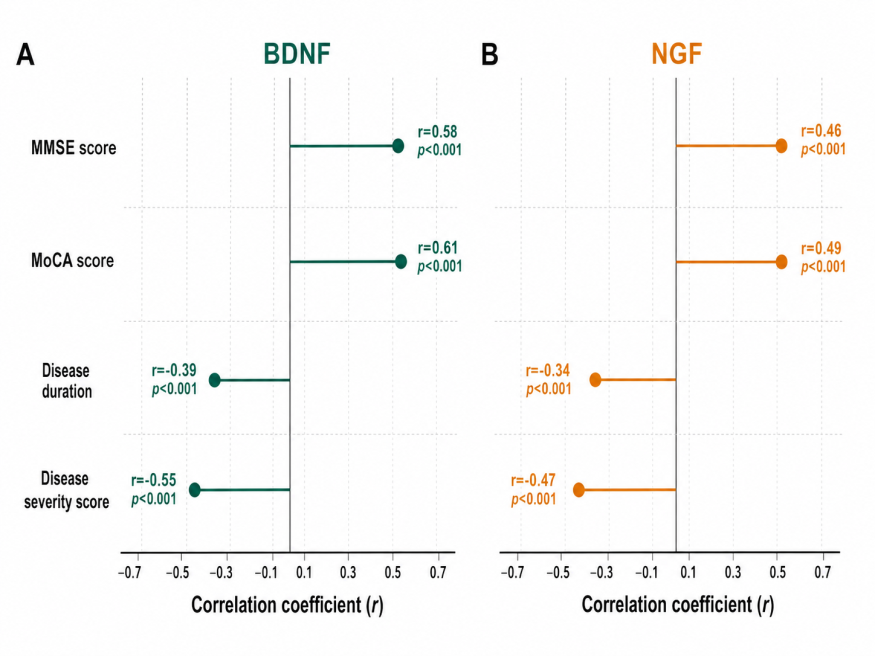
Figure 1: Correlation of BDNF and NGF with cognitive performance and disease characteristics.
Saeeda Ahmed1* | Muhammad Abdullah1 | Khadeejah Qadir2 | Shareefa Bint-e Umar2
1Department of Allied Health Sciences, Government College University, Faisalabad, Pakistan | 2Department of Basic Health Sciences, King Abdul Aziz University of Health Sciences, KSA
*Correspondence: Saeeda Ahmed (saeeda.ahmed222@gmail.com)
Received: 11 September, 2026; Revised: 23 October, 2026; Accepted: 26 October, 2026; Published: 30 October, 2026
Background: Alzheimer's disease (AD) is a progressive, neurodegenerative disease that leads to cognitive decline. This study aimed to compare serum Brain-Derived Neurotrophic Factor (BDNF) and Nerve Growth Factor (NGF) levels between AD patients and normal controls and to evaluate correlation with cognition and the severity of the disease. Methods: This cross-sectional analytical study included 145 participants (105 patients and 40 normal controls). The Mini-Mental State Examination (MMSE) and Montreal Cognitive Assessment (MoCA) were used to measure cognitive function, and AD severity was graded as mild, moderate, or severe. Enzyme-linked immunosorbent assay (ELISA) was used to measure serum BDNF and NGF, which were correlated and tested for their diagnostic performance and associated factors of severity. Results: Serum BDNF and NGF were significantly lower in AD patients than controls (11.24 ± 3.42 vs 17.86 ± 4.11 ng/mL and 38.7 ± 11.5 vs 56.9 ± 13.2 pg/mL, respectively; both p<0.001). Both decreased from mild to severe AD (trend p<0.001). BDNF correlated with MMSE (r=0.58) and MoCA (r=0.61), while NGF correlated with MMSE (r=0.46) and MoCA (r=0.49); all p<0.001. The joint performance of BDNF and NGF showed 86.7% sensitivity and 82.5% specificity, with an AUC of 0.90. There was a positive association with severity between low BDNF, low NGF, and disease duration >5 years. Conclusions: Lower serum BDNF and NGF were correlated with worse cognition and higher severity of AD, indicating their potential as adjunctive biomarkers. Further multicenter studies should be conducted to confirm their future use for monitoring disease progression and treatment responsenhance recovery and shorten hospital periods. The results should be confirmed by multicenter studies.
Keywords: Alzheimer Disease; Biomarkers; Brain-Derived Neurotrophic Factor; Cognition; Disease Progression; Enzyme-Linked Immunosorbent Assay; Nerve Growth Factor.
Alzheimer's disease (AD) is a progressive neurodegenerative condition that is a significant cause of the growing global burden of dementia, disability, and death 1. Cognitive decline occurs throughout the continuum of Alzheimer's disease, and over time, cognitive measures can be assessed with validated cognitive screening questionnaires 2. Therefore, Hospital length of stay (LOS) is an important measure of recovery, utilization of resources, readiness for discharge, and efficiency of services renderedBiomarkers are increasingly studied as they can offer easy-to-access add-on tools to clinical evaluation and minimize invasive diagnostic interventions 3. The Montreal Cognitive Assessment (MoCA) is a tool that is supported by meta-analytic data as a useful tool for the identification of clinically relevant cognitive impairment 4. Brain-derived neurotrophic factor (BDNF) promotes the survival of neurons, plasticity of synapses, learning and memory, and changes in BDNF biology have been linked to cognitive decline 5. Associations between serum BDNF and CSF biomarkers of Alzheimer and atrophy of the medial temporal lobes is consistent with a peripheral biomarker function 6. Circulating BDNF levels varied between normal cognition, MCI, and Alzheimer-type dementia in a large elderly population 7.
The plasma BDNF changes have also been found in different clinical phases of AD, which may be relevant to the course of the disease 8. Human studies show that the basal forebrain cholinergic neurons are dependent on nerve growth factor (NGF), and there is a progressive NGF-metabolic impairment throughout the AD continuum 9. . Increased AD neuropathology and decreased cognitive function have also been associated with abnormal degradation of mature NGF 10. The peripheral BDNF concentrations may differ in men and women, and vary within different genetic backgrounds, which makes it difficult to interpret a single neurotrophic marker 11. However, meta-analytic evidence suggests that peripheral BDNF has the capacity for diagnostic application and would be beneficial to evaluate complementary neurotrophic factors within the same clinical cohort 12.
The objective of the present study was to compare the serum brain-derived neurotrophic factor (BDNF) and nerve growth factor (NGF) levels of Alzheimer's disease (AD) patients with normal controls. It also aimed to assess their associations with Mini-Mental Status Examination (MMSE) and MoCA scores and clinical disease severity. Lastly, the study assessed the discriminative efficacy of BDNF and NGF as complementary markers for
This cross-sectional analytical study (January 2021 to December 2021) aimed to investigate the association between circulating neurotrophic factors and cognitive problems in Alzheimer's disease patients (n=105) and cognitively healthy controls (n=40). Sample size was calculated through OpenEpi software Version 3.0 (Emory University, Atlanta, GA, USA; RRID: SCR_021913) 13. Sample size was estimated using the formula n =2(Z(α/2) + Zβ )2 σ2/µ1-µ2, where Z(α/2) represents the standard normal deviate for the selected significance level, Zβ represents the standard normal deviate for the desired statistical power, σ is the assumed standard deviation, and µ1-µ2 is the anticipated difference between group means.
Patients were cognitively assessed with a clinical diagnosis of Alzheimer's disease and had venous blood drawn. Participants who had other major neurodegenerative disorders, acute neurological illness, acute systemic infection, severe liver or kidney disease, or diseases that have a known association with major cognitive impairment were excluded. There was no known history of dementia or major neurological disease for controls. A structured data collection form was used to get demographic and clinical information. Data collected included age, sex, level of education, disease duration, and medical history. The MMSE and MoCA were used to measure global cognitive function. The greater the score, the better the cognitive function. A clinical assessment system routinely employed in the study center was used to evaluate the severity of the disease, which was divided into mild, moderate, and severe.
The clinical classification was recorded before laboratory analysis, to minimize interpretation bias. Each participant had peripheral venous blood collected (about 5 mL) via standard phlebotomy procedures. Clotting of the samples and their subsequent centrifugation were performed in a standard laboratory setting. The serum was separated, portioned into labeled tubes, and then stored in proper frozen conditions for biochemical analysis. Multiple freeze-thaw cycles were prevented. Commercially available human-specific enzyme-linked immunosorbent assay (ELISA) kits were used to measure serum BDNF (Elabscience®, Cat. No. E-EL-H0010) and NGF (Elabscience®, Cat. No. E-EL-H1205) concentrations. Processing of standards, quality controls, and serum samples followed the manufacturer's instructions. Absorbance was detected at the wavelength recommended in the different assay protocols by using a microplate reader. Standard curves were used to determine concentrations, which were reported as ng/mL for BDNF and pg/mL for NGF.
The data were entered and analyzed using SPSS version 27 (Armonk, NY: IBM Corp.). All continuous variables were found to be normally distributed and reported as the mean ± SD or median (IQR) as appropriate. Categorical variables were summarized in terms of frequencies and percentages. Independent-samples t-test or Mann–Whitney U test was used to compare the concentration of biomarkers between the Alzheimer's disease patients and controls, depending on the type of data distribution. Differences between the BDNF and NGF concentrations of mild, moderate, and severe disease categories were determined by one-way ANOVA or Kruskal–Wallis analysis. Pearson or Spearman correlation analysis was used to assess the correlations between the concentrations of the neurotrophic factors, MoCA score, MMSE score, and disease duration and clinical severity.
The potential discriminatory performance of individual and combined biomarkers was assessed using receiver operating characteristic (ROC) curve analysis. Factors independently associated with increasing disease severity were identified using multivariate logistic regression. A two-sided p-value < 0.05 was considered as statistically significant. The study was carried out after securing approval from the appropriate institutional ethical committee. Participants' informed consent was obtained (where applicable) and legal representation informed consent for participants under the age of majority. All information from the participants was coded and analyzed anonymously, which is to keep the information confidential.
A total of 145 participants were included, 105 of whom were diagnosed with clinical AD, and 40 were cognitively healthy controls. In the patients with AD, 31 were clinically classified as having mild disease, 46 as moderate, and 28 as having severe disease. The levels of both BDNF and NGF in the serum were found to be lower in AD patients as compared to controls. There was also a correlation between lower levels of neurotropic factors and cognitive function and disease severity. As shown in Table 1 there were no significant differences between the AD patients and controls with respect to age, sex distribution, or years of education at p>0.05. But, MMSE and MoCA scores were significantly lower in AD patients compared to controls (17.8±5.1 vs 27.4±1.8 and 15.9±4.7 vs 25.9±2.1, respectively; both p<0.001), reflecting significantly greater cognitive impairment in the AD group.
| Characteristic | AD Patients (n=105) | Controls (n=40) | p-value |
|---|---|---|---|
| Age, years | 72.6 ± 7.8 | 70.1 ± 6.9 | 0.071 |
| Female sex, n (%) | 61 (58.1) | 22 (55.0) | 0.744 |
| Education, years | 8.2 ± 3.7 | 9.1 ± 3.5 | 0.181 |
| Disease duration, years | 4.8 ± 2.6 | — | — |
| MMSE score | 17.8 ± 5.1 | 27.4 ± 1.8 | <0.001 |
| MoCA score | 15.9 ± 4.7 | 25.9 ± 2.1 | <0.001 |
The levels of serum BDNF and NGF were significantly decreased in Alzheimer's disease patients as compared to cognitively normal patients. Mean BDNF was 11.24 ± 3.42 ng/mL versus 17.86 ± 4.11 ng/mL, while NGF was 38.7 ± 11.5 pg/mL versus 56.9 ± 13.2 pg/mL, respectively (both p<0.001) Table 2.
| Biomarker | AD Patients (n=105)(n) | Controls (n=40) (%) | p-value |
|---|---|---|---|
| BDNF (ng/mL) | 11.24 ± 3.42 | 17.86 ± 4.11 | <0.001 |
| NGF (pg/mL) | 38.7 ± 11.5 | 56.9 ± 13.2 | <0.001 |
The levels of BDNF and NGF were found to decrease with the increase in severity of Alzheimer's disease. The patients with severe AD had the lowest levels of BDNF (8.64 ± 2.18 ng/mL) and NGF (30.7 ± 7.4 pg/mL), and there was a significant decrease in these levels across the mild, moderate, and severe disease groups (both p<0.001) Table 3.
| Disease Severity | n | BDNF (ng/mL) | NGF (pg/mL) |
|---|---|---|---|
| Mild AD | 31 | 13.72 ± 2.61 | 45.8 ± 9.7 |
| Moderate AD | 46 | 11.18 ± 2.47 | 38.2 ± 8.6 |
| Severe AD | 28 | 8.64 ± 2.18 | 30.7 ± 7.4 |
| Trend p-value | <0.001 | <0.001 |
There were significant positive correlations between BDNF and both MMSE (r=0.53, p<0.001) and MoCA (r=0.61, p<0.001) scores, with BDNF having the strongest association with MoCA. In contrast, lower levels of BDNF and NGF were significantly negatively correlated with disease duration and severity, respectively, suggesting that higher levels of the two neurotropic factors were correlated with shorter disease duration and disease severity, respectively Table 4.
| Variable | BDNF | NGF |
|---|---|---|
| MMSE score | r = 0.58, p<0.001 | r = 0.46, p<0.001 |
| MoCA score | r = 0.61, p<0.001 | r = 0.49, p<0.001 |
| Disease duration | r = -0.39, p<0.001 | r = -0.34, p<0.001 |
| Disease severity score | r = -0.55, p<0.001 | r = -0.47, p<0.001 |
Both BDNF and NGF were positively correlated with MMSE and MoCA scores, while showing negative correlations with disease duration and disease severity Figure 1. The strongest positive correlation was observed between BDNF and MoCA score, whereas disease severity score showed the strongest inverse association with BDNF.
Figure 1: Correlation of BDNF and NGF with cognitive performance and disease characteristics.
The AUC for serum BDNF and NGF discriminating AD patients from controls was 0.86 and 0.82, respectively, indicating good discriminatory power for both. The BDNF + NGF model gave the highest accuracy of 86.7% sensitivity, 82.5% specificity, and an AUC of 0.90, showing better discriminatory performance between the two biomarkers Table 5.
| Biomarker | Optimal Cut-off | Sensitivity (%) | Specificity (%) |
|---|---|---|---|
| BDNF | 14.1 ng/mL | 81.0 | 80.0 |
| NGF | 47.5 pg/mL | 76.2 | 77.5 |
| BDNF + NGF | — | 86.7 | 82.5 |
Increased severity of Alzheimer's disease was significantly associated with decreased BDNF (OR=3.72, 95% CI: 1.71–8.09; p=0.001), low NGF (OR=3.19, 95% CI:1.59–6.42; p=0.001) and duration of disease >5 years (OR= 1.86, 95% CI:1.12–3.12; p=0.018). By contrast, older age (75+ years) and female sex were not significantly related to increased disease severity (p>0.05) Table 6.
| Variable | Odds Ratio | 95% CI | p-value |
|---|---|---|---|
| Low BDNF | 3.72 | 1.71–8.09 | 0.001 |
| Low NGF | 2.81 | 1.31–6.04 | 0.008 |
| Disease duration >5 years | 2.46 | 1.16–5.21 | 0.019 |
| Age >75 years | 1.69 | 0.78–3.66 | 0.182 |
| Female sex | 1.18 | 0.56–2.48 | 0.667 |
The present study compared serum BDNF and NGF levels between patients with Alzheimer’s disease (AD) and cognitively healthy controls. It also examined the relationships of these neurotrophic factors with cognitive performance, disease duration, and clinical severity. Additionally, the diagnostic performance of individual and combined biomarkers was evaluated to explore their potential clinical utility.
The current study showed that there was a decrease in neurotrophic support in AD, and serum BDNF and NGF were significantly reduced in AD patients compared to the cognitively normal controls. Levels of the three neurotrophic factors were found to decrease between mild and moderate and severe AD, and lower levels of each were correlated with decreased MMSE and MoCA scores. Moreover, BDNF and NGF were also helpful discriminators, and low BDNF, low NGF, and disease duration >5 years were independent markers of disease severity. The results are consistent with study reported significantly lower serum BDNF concentrations in patients with AD than in healthy controls and a positive association between BDNF and cognitive performance 14.The same peripheral BDNF depletion was reported, with significantly decreased serum BDNF in AD 15.
It is worth emphasizing the progressive decrease of BDNF by severity category, as this implies that the neurotrophic changes may be a marker of disease burden rather than simply diagnostic. The levels of BDNF were lower in Alzheimer dementia compared to amnestic MCI and control subjects, and the BDNF ratio was associated with the level of severity, as defined by MMSE 16. This is also consistent with the reduced serum BDNF in AD and the positive associations they reported between serum BDNF and MoCA score 17. Longitudinal evidence is in favor of a protective interpretation: BDNF is associated with a reduction in the likelihood of MCI conversion to Alzheimer's disease after 4 years of follow-up in cognitively normal older adults 18. In NGF, dysfunctional NGF metabolism was shown in both preclinical and clinical AD, characterized by a decrease in mature NGF and NGF's association with cognition and AD pathology 19. The present study findings showed that the concentrations of BDNF were, as expected, positively correlated with the MMSE and MoCA scores, suggesting that elevated serum BDNF levels are associated with better global cognitive functioning. Higher baseline mature BDNF was correlated with better cognitive performance on the subsequent MoCA in older adults, which further suggests that there is a longitudinal relationship between neurotrophic status and cognition 20. A positive correlation between serum BDNF levels and various neuropsychological tests, and high BDNF levels correlated with slower cognitive decline in patients with AD 21.
These associations are taken from pathophysiology to potential clinical utility by the ROC findings. BDNF alone had an AUC of 0.86 and NGF 0.82, while the combination of both resulted in an AUC of 0.90, with a sensitivity of 86.7% and a specificity of 82.5%. Similarly, a composite four-biomarker blood panel achieved AUC values of 0.903–0.928 for distinguishing AD from cognitively normal controls, supporting the improved diagnostic performance achievable by combining circulating biomarkers 22. Recently, a meta-analysis verified that peripheral BDNF can be used as a measurable diagnostic marker for AD 23. In a systematic review and meta-analysis, plasma p-tau231 increased progressively from cognitively unimpaired individuals through MCI to AD and showed significant discriminatory performance, further supporting the value of circulating biomarkers across the AD continuum 24.The sensitivity and specificity of the blood biomarkers were also found to vary significantly according to the blood analyte and assay, highlighting the importance of assay-specific validation 25.
There are some restrictions to be noted. The cross-sectional study design does not allow for establishing whether the decline in BDNF and NGF levels is a cause or a consequence of cognitive decline, and the single-center sample size may hinder generalizability 26. Further multicenter longitudinal research is needed that homogenizes pre-analytical procedures, adds established markers of amyloid or tau, and assesses predictive value of serial BDNF/NGF levels for conversion, cognitive trajectory and treatment response.
BDNF and NGF levels in the serum were significantly lower in patients with Alzheimer's disease and decreased as the severity of the disease increased. Poorer MMSE and MoCA performance, longer disease duration, and higher clinical severity scores were correlated with lower scores; combination of these scores exhibited diagnostic discrimination. These results indicate that circulating neurotrophic factors could be used as a supplementary biomarker to evaluate cognitive decline and disease burden. Such markers should be validated in future multicenter studies with a longitudinal design, and their utility in the monitoring of progression and treatment response should be evaluated.
This work is published by Multidisciplinary Scholarly Advancement and Research MSAR Institute. © 2026 The Author(s). The full terms of Journal Publishing policies are available at https://msarjournals.com/index.php/index/open-access and incorporate the Creative Commons Attribution – Non Commercial (CC BY-NC 4.0) License https://creativecommons.org/licenses/by-nc/4.0/. By accessing the work you hereby accept the Terms. Non-commercial uses of the work are permitted without any further permission, provided the work is properly attributed. Publisher’s Note: MSAR Institute remains neutral with regard to jurisdictional claims in published maps and institutional affiliations, and assumes no liability for the scientific accuracy or clinical efficacy of the content herein, as they rest entirely with the authors.